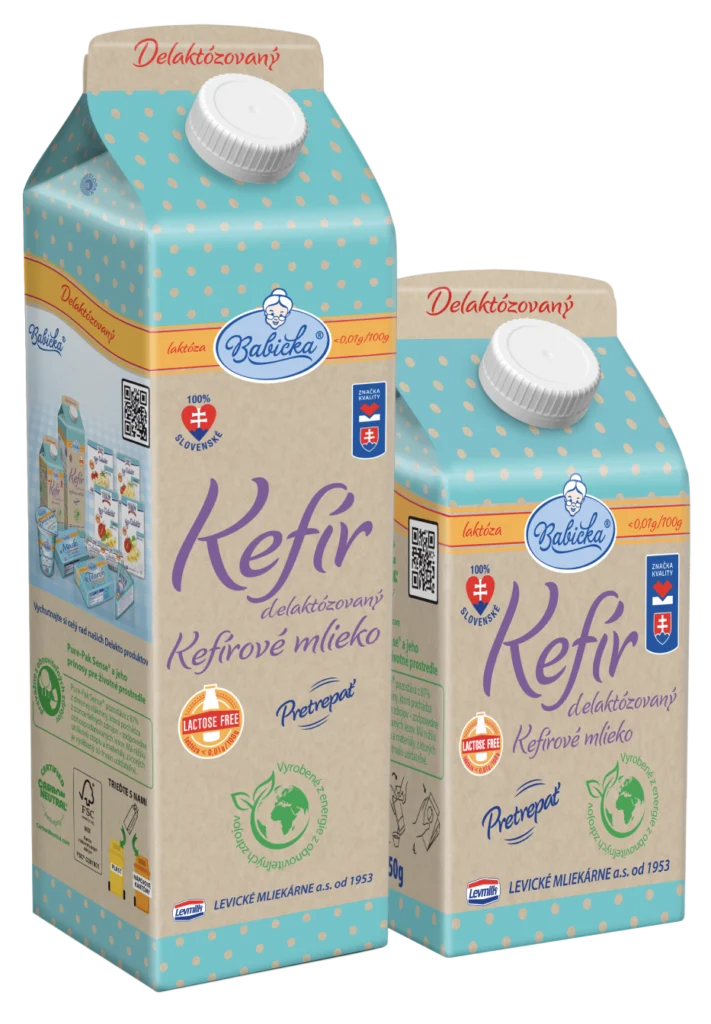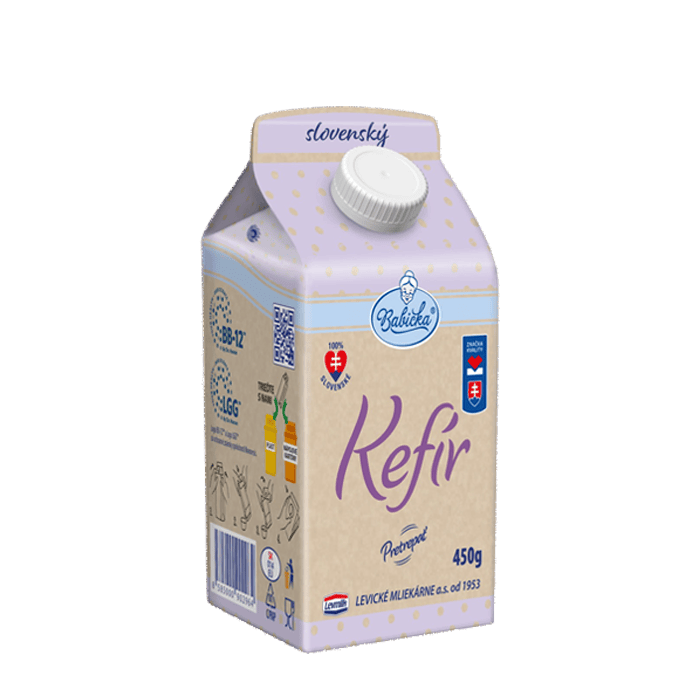
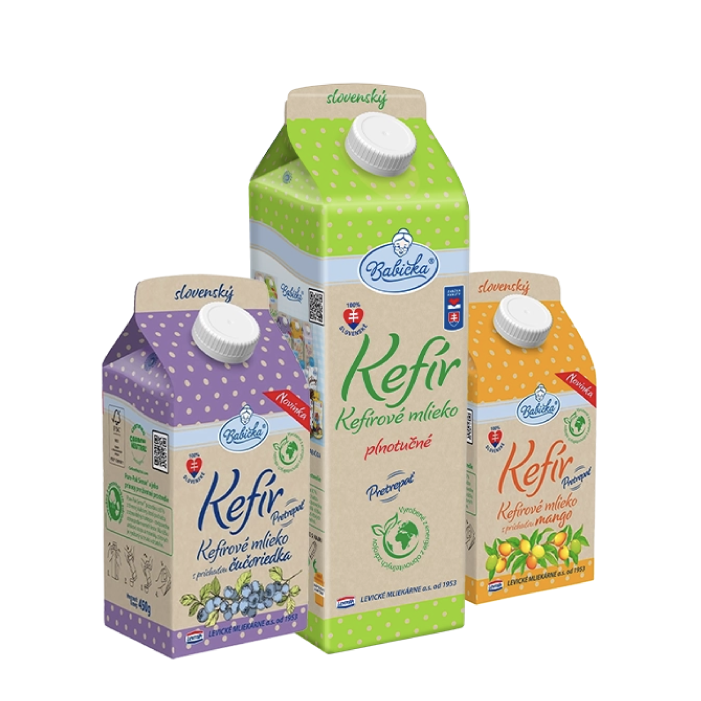





Fermented milk products constitute one of the most significant groups of dairy products. Thanks to their complete blend of bacteria and yeasts, they contribute to the healthy nutrition not only of children, adolescents, and people of working age, but also of the older generation.
Kefir is characterized by a liquid, creamy consistency combined with a delicious tart taste and a hint of fizziness. With its content of probiotics, vitamins, and minerals, it is currently ranked among the healthiest foods, holding an indispensable place in everyone’s varied diet.
Fermented milk products,
that you will love
How is kefir made?
Kefir is a fermented milk drink made from fresh cow’s milk using so-called kefir grains. Kefir grains, among other substances, also contain a polysaccharide called kefiran, which gives kefir its typical thick, creamy consistency and pleasant taste.
At the beginning of the production process for this fermented milk drink, the milk is inoculated with lactic acid bacteria and yeasts from kefir grains. The essence of production is the fermentation of milk sugar – lactose, which occurs with the help of cultures of lactic acid bacteria and yeasts living in mutual symbiosis.
Kefir as a health-
beneficial food
Kefir has beneficial effects on human health due to its nutritional composition and probiotic culture content. Kefir has a beneficial impact on various aspects of the human body’s functioning and is the subject of scientific research in various institutions – universities, international laboratories, research institutes, and the like. Among its greatest benefits is primarily its high probiotic content.
Kefir gained the most attention as a health-beneficial food in the 19th century when tuberculosis broke out in Russia and was suppressed by the consumption of kefir by the Russian population. The reason for this miracle is the fact that kefir creates healthy bacteria that build immunity against several serious diseases (including those of the current modern era). Regular consumption of kefir, as has been proven by several studies, thus positively affects the immune system, digestion, and the entire intestinal microflora. In addition, kefir also has antibacterial effects, alleviates digestive problems, and thanks to its low lactose content, it is easily digestible, often even
for people with lactose intolerance.
Healthy Bacteria
Kefir creates health-beneficial bacteria.

Antibacterial Effects
It contains bacteria that can contribute to suppressing the growth of harmful microorganisms in the intestines.

Immunity Support
Bacteria build immunity against several serious diseases of the modern era.

Easily Digestible
Thanks to its low content, kefir is easily digestible.
Composition and Nutritional Values of Kefir
- Organic acids (lactic acid, citric acid, propionic acid, pyruvic acid, etc.)
- Proteins with a diverse composition of essential amino acids (cysteine, phenylalanine, tryptophan, leucine, lysine)
- Among carbohydrates, it contains residual lactose, i.e., lactose that is not processed by the fermentation process during production
- Fat and fatty acids – their content is similar to that in the milk from which the kefir was made.
- Minerals – calcium, phosphorus, magnesium, potassium, sodium, iron, zinc, copper, manganese
- Vitamins – vitamins A, C, D, E, B-complex vitamins
- Probiotic microorganisms – the content is variable, but kefir mostly contains lactobacilli and noble yeasts.
Kefir Consumption – When to Be Cautious?
Kefir has beneficial effects on human health due to its nutritional composition and probiotic culture content.
Lactose Content
During kefir production, the lactose contained in milk is partially converted into lactic acid, which may no longer be an issue for people suffering from lactose intolerance. However, caution is advised if you have zero or very low tolerance, as a small amount of so-called residual lactose remains in the finished product during kefir production. For such individuals, a special type of kefir, known as delactosed kefir, can be an alternative for consumption.
Sugar and Fat Content
Kefir contains a certain amount of natural or added sugar, which could be a concern for those at risk of obesity, heart disease, type 2 diabetes, etc. The market offers kefir with varying fat content, depending on the raw material used – from skimmed to full-fat products.
Type 1 Diabetes
Kefir has a low to medium glycemic index, so its consumption does not cause a significant increase in blood sugar levels in the body, but it has a high insulinemic index, meaning it can raise blood insulin levels more than other foods.
What are the differences between sour milk, acidko, and kefir?
Fermented beverages have been part of diets for a very long time. Currently, the market offers several types of fermented milk products, such as yogurt, kefir, acidophilus milk, buttermilk, soured milk, kefir milk, and fermented milk.
What are the differences between sour milk, acidko, and kefir?
Regular consumers often do not fully distinguish these types, and it can sometimes be difficult to navigate the offered assortment, as they appear similar at first glance. All taste pleasant, tart, have a similar consistency, and are mostly made from cow’s milk, with small amounts from goat’s or sheep’s milk.
Kefir
Kefir is a fermented milk product made using yeasts and yeast bacteria, through kefir grains. During production, a small amount of carbon dioxide is also formed, and in traditional production, a small amount of alcohol. It is easily digestible and differs from other fermented milk products by its distinctly tart, fizzy taste. Kefir milk is similar, but it is thinner and contains fewer live organisms.

Acidophilus Milk
Acidophilus milk, popularly known as acidko, is a product often mistaken for kefir. Unlike kefir, its production uses the Lactobacillus acidophilus culture and is mixed with sour milk fermented with a cream culture. This gives it a balanced, deliciously tart taste. It is easily digestible and has a beneficial effect on the intestinal microflora.

Yogurt
Yogurt is made from pasteurized milk, cream, or milk protein by adding a yogurt culture containing live bacteria. Traditionally, two technologically different production methods are used: yogurts ripening directly in packaging or ripening in storage tanks, from which they are then packaged. They differ from kefir in having a creamier consistency.